When buyers’ friends become your sales team
Written by Alex Glover — 20+ years photographing property.
Buyers are not neutral analysts. They are humans.
Humans form impressions very quickly. MIT research found that the brain can process images seen for as little as 13 milliseconds. The halo effect, first described by Edward Thorndike in 1920, shows how a positive first impression influences how people judge what follows.
Estate agents can use this.
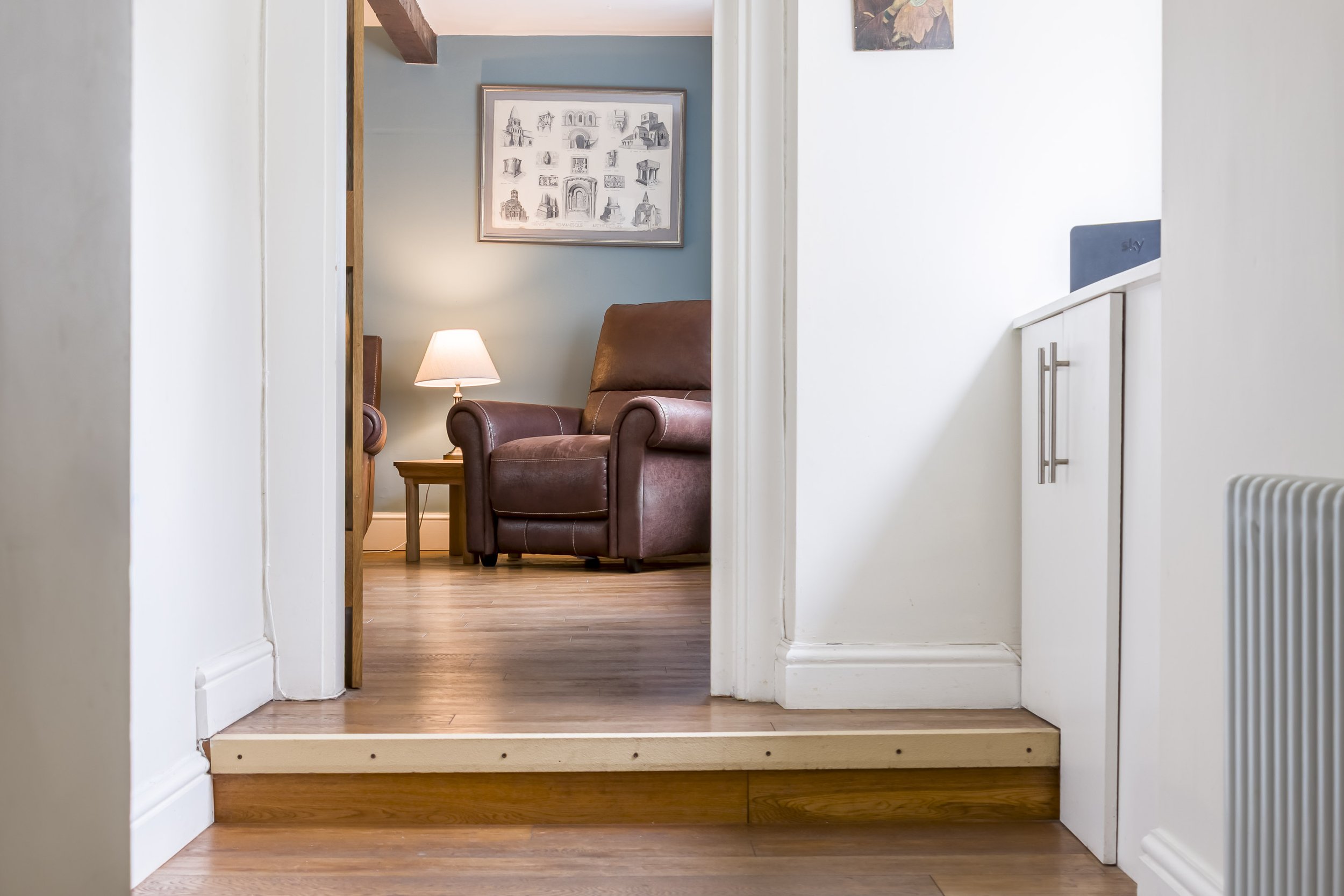
Clean, calm, well-composed images work with the brain’s fast visual system: the part that reads a scene before we have properly thought about it. We have spent thousands of years responding to visual cues of order, safety, care and value. A balanced room feels easier to trust than a confused one.
That is why composition matters commercially.
A room photographed with an understanding of human desire can do more than show the space; it can make the property feel cared for, the agent feel professional, credible and meticulous, and the marketing feel more considered. That supports the perceived value of the home and the person selling it.
This is not just about getting attention.
It is about what the buyer feels once they are looking.
In a parallel universe, one image is just a wide angle document of the room. The second affects us humans in a way that makes us trust, want, love and share. The kitchen doesn’t change, the buyer’s response does. When that response is triggered reliably and repeatably, the knock-on effect can be huge.
The buyer does not always decide alone. They send the listing to a partner, parent, friend and colleague. If the images create enough trust and desire, those people do not just look at the link. They help sell the viewing. They become the ones saying, “You should go and look at that”. That’s when buyers’ friends and family become part of the agent’s sales team.
Property photography is not documentation. It’s the first layer of trust.
See how the training behind this works.