What buyers notice before they know they’ve noticed it
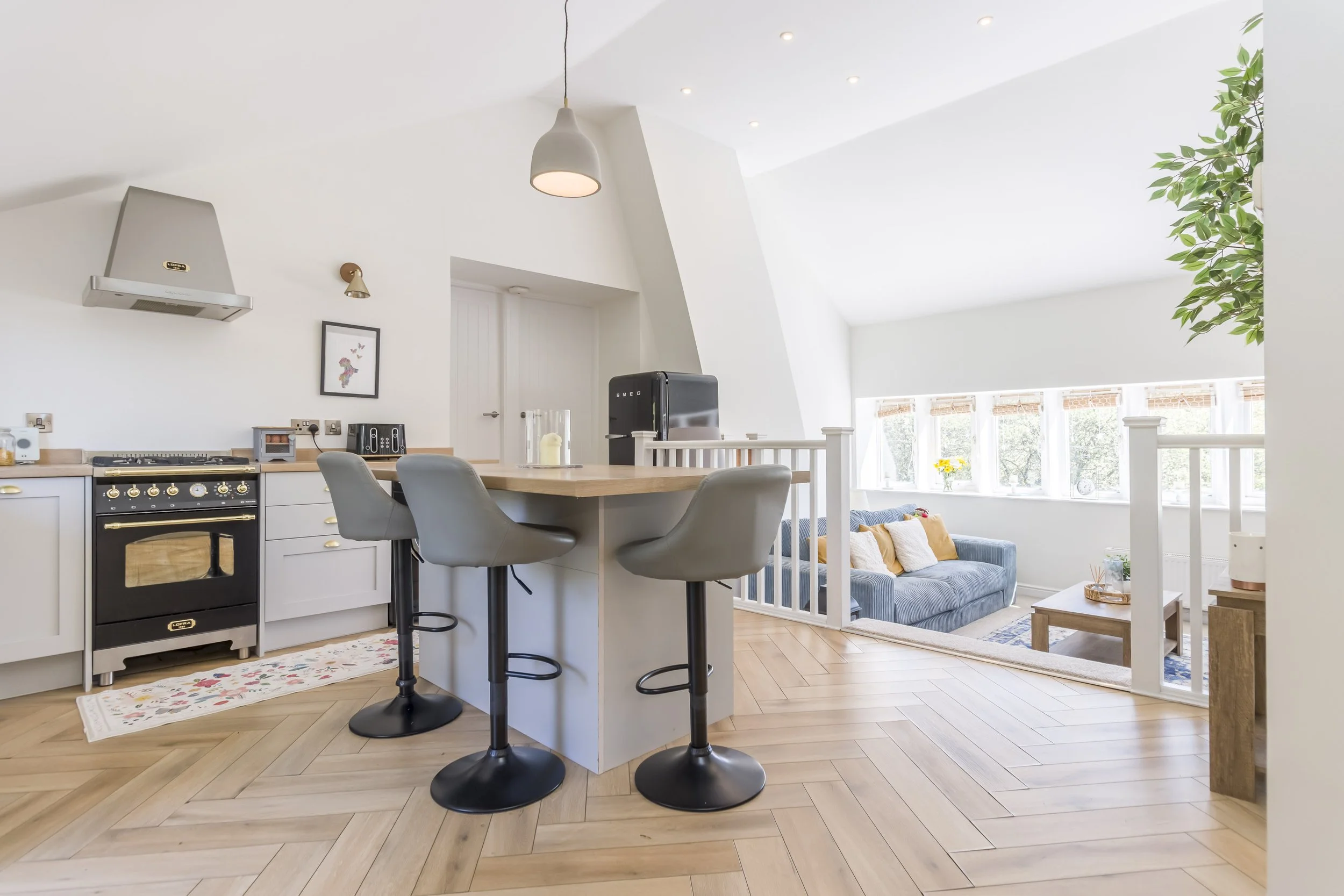
Calm Kitchen
Written by Alex Glover — 20+ years photographing property.
Buyers react before they explain.
They may not know why one property feels calm and another feels awkward. They may not notice the camera height, the lens choice, the light, the verticals or the edge of the frame. They just feel the result.
That result affects the listing.
A room can be clean, bright and well presented in real life, but still photograph poorly. If the image makes the space hard to read, the buyer has to work harder. If the room feels cramped, dark, distorted or visually busy, the property starts with doubt it did not need.
Good property photography removes that doubt. It helps the buyer understand the room quickly. The shape of the space is clear. The light feels believable. The viewpoint feels natural. The image feels ordered without looking false.
None of this asks the buyer to admire the photograph. It simply helps them feel confident about the home. That confidence is built in small ways. A straight room feels more stable. A clear composition feels more considered. A calm image makes the property feel easier to trust.
The reverse is also true. Poor photography does not always look terrible. More often, it quietly weakens the property. A good room feels ordinary. A well-kept home feels less cared for. A strong listing feels less convincing than it should. The room has not changed. The buyer’s response has.
This is why property photography is not just about pointing a wide lens at a tidy room. It is a set of small decisions that influence how the home is read before the buyer has found words for it.
Estate agents are not only showing what is there. They are shaping the first feeling a buyer has about the property.
And that first feeling does a lot of work.
See how the training behind this works.